Most tractors and reefer trailers running US and Canadian highways today ride on air ride suspension: rubber air springs, kept at ride height by levelling valves, carrying the load on regulated air pressure. Drivers know it as the smooth ride that protects freight and equipment. What fewer stop to consider is the physics: the pressure in those air bags is directly related to the weight they carry, which means every air ride vehicle is already carrying the core of a scale. It just is not wired to tell you anything, yet.
How air ride suspension works
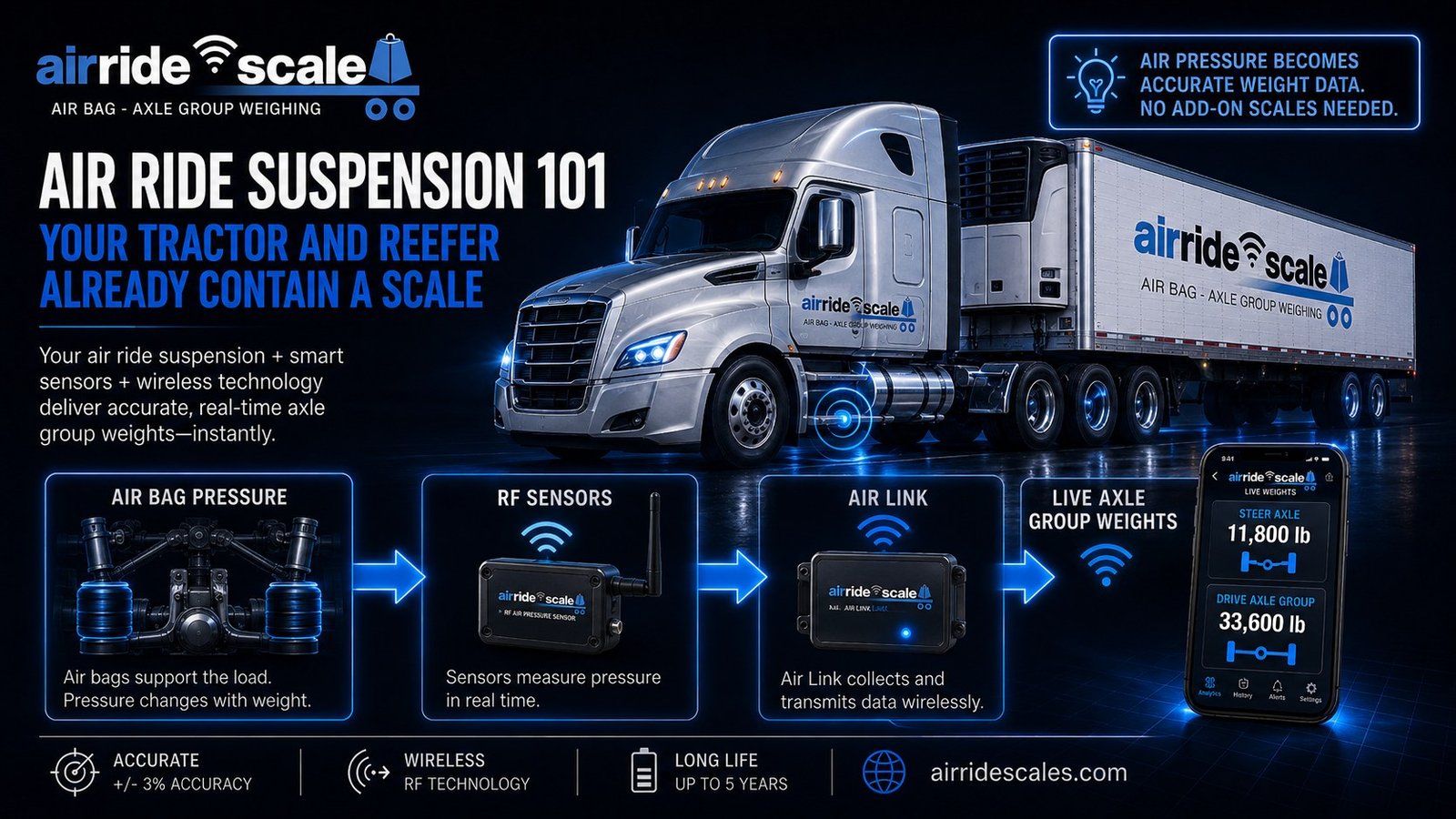
Each axle group sits on air bags fed from the truck’s air system. A height control valve watches ride height: add load and the trailer squats, the valve adds air until the height recovers, and the bags end up at a higher pressure. Remove load and the valve exhausts air back out. The suspension is constantly balancing itself so that pressure matches weight, on the steer arrangement, the drive tandem and the trailer tandems alike. That self regulating behaviour is what makes the ride smooth, and it is also what makes the pressure signal so useful: at settled ride height, bag pressure is an honest proxy for the weight on that group.
From pressure to a number you can act on
Old timers have read air gauges for decades as a rough weight hint. The difference between a gauge and a scale is calibration and calculation, and that is the job AirRide Scale does. Wireless RF sensors mounted at each air bag group read the pressure continuously. The AirRide Air Link hub collects every sensor across the tractor and trailer, applies the stored calibration for each group, and sends the result by Bluetooth to the Loadsense app on your phone: steer, drives and trailer tandems in pounds or kilograms, plus gross, plus a plain legal or over status. Calibrate once per group against a known weight, a certified CAT scale ticket is ideal, and the readings hold until the suspension itself changes.
Why this beats a gauge: a pressure gauge shows PSI on one circuit and leaves the math, the axle split and the legal limits to you. A calibrated air ride scale shows the finished answer for every group at once, which is the difference between a hint and a decision.
What it means in practice
- Weigh while loading at any dock, shed or field, no detour to a public scale.
- Per axle group visibility, the same breakdown enforcement uses at the weigh station.
- No cab wiring: sensors are wireless, the phone is the display, and fitting is a same day retrofit.
- Truck and trailer together: up to 16 sensors on one Air Link covers full combinations, drop and hook included.
The one requirement: because the system weighs through the air springs, it fits vehicles with air bag (air ride) suspension on each axle group you want weighed. Spring ride equipment has no pressure signal to read, so it is not supported.
The upgrade hiding in plain sight
Fleets spend real money adding capability to trucks: cameras, telematics, tire systems. Weighing is the rare upgrade where the expensive part, the sensing medium itself, was factory fitted the day the truck was built. Adding AirRide Scale is closer to unlocking a feature than installing one. The deeper technical story is in our guides to how air bag suspension scales work and the technology behind modern air ride scales.
Common questions, quick answers
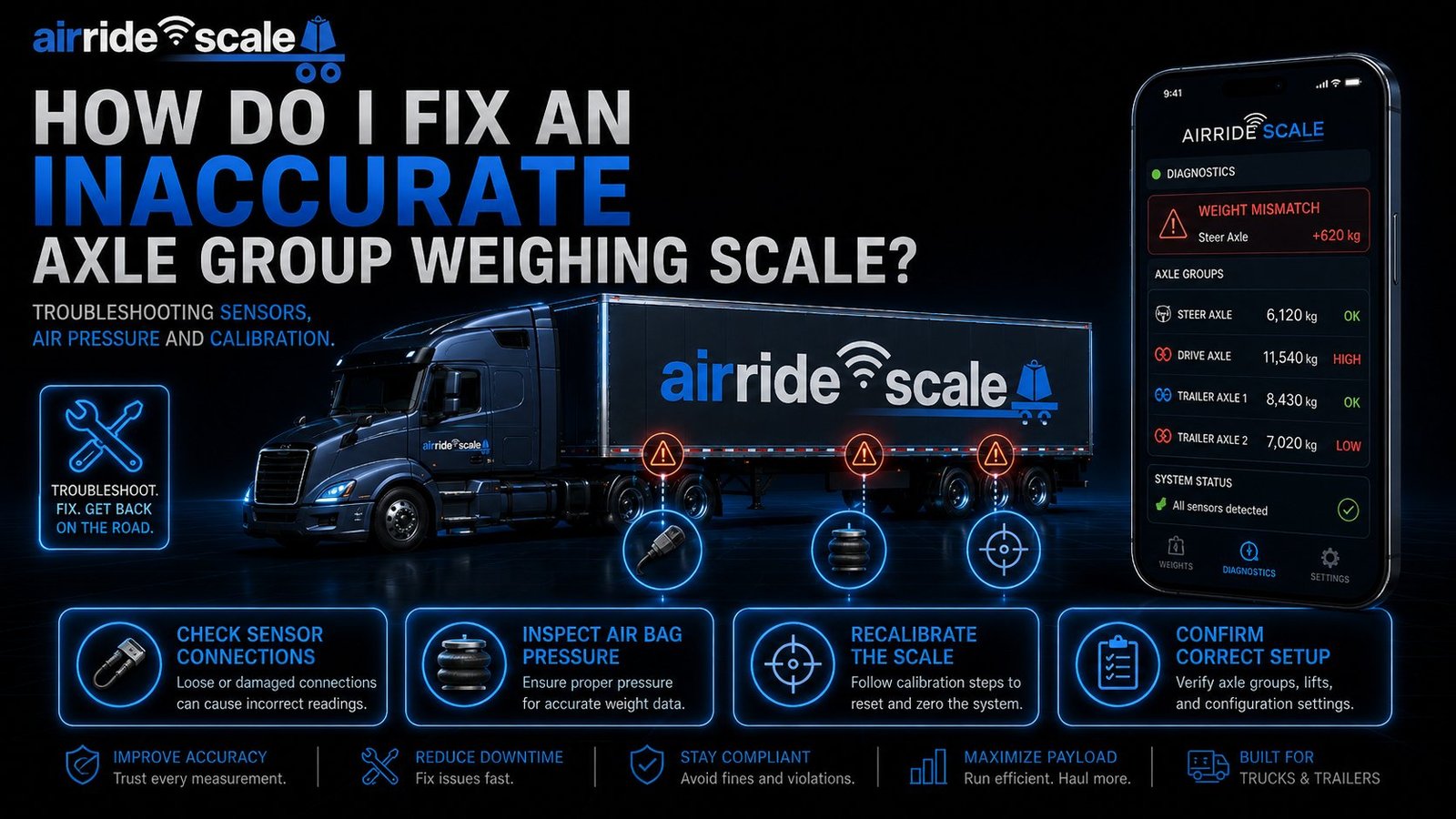
Does it work with dual height control valves? Yes, groups with two levelling valves take a sensor per valve side, and the system supports up to 16 sensors across the combination. Does temperature swing the readings? The suspension self regulates to ride height, and calibration is per group, so day to day readings stay dependable; recalibrate after suspension work, not after weather. What about lift axles? Weigh with the axle in the same position you calibrated in, consistent with how enforcement will weigh you. Will it survive winter roads? The RF sensors are sealed units built for the underside of a trailer, salt spray included. And if a sensor is damaged, the app’s diagnostics show exactly which group dropped out, so a fix is a part swap, not a mystery. The rest of the answers live on our FAQ page.
The bottom line: if your tractor and reefer ride on air, they already know what they weigh. An air ride scale simply lets them tell you, on every load, before the scale house asks. See what it takes to switch yours on.