Cross the border northbound and the rules change language. US limits in pounds give way to Canadian limits in kilograms, set province by province, with different allowances for different axle configurations and, in winter, seasonal adjustments that can lower what a road will accept. For a tractor and trailer running between the two markets, weight compliance is not one problem but several, and the driver is the person expected to solve all of them at every dock. This is where an air ride scale quietly earns its place in a cross border operation.
Two systems, one truck
A combination that is comfortably legal against the US 80,000 pound gross limit still has to satisfy Canadian group limits in kilograms once it crosses, and those limits depend on the province, the configuration and the axle spacings. Ontario and Quebec treat certain configurations differently than the western provinces, spring thaw restrictions can temporarily reduce allowable weights on secondary roads, and the enforcement scale does not care which side of the border the trailer was loaded on. Managing that with a calculator and a currency style conversion in your head, at a dock, at 5 am, is how mistakes happen.
Live weights in either unit
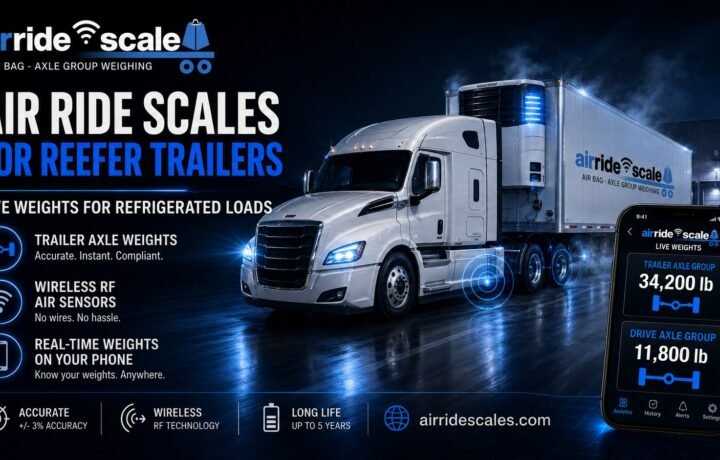
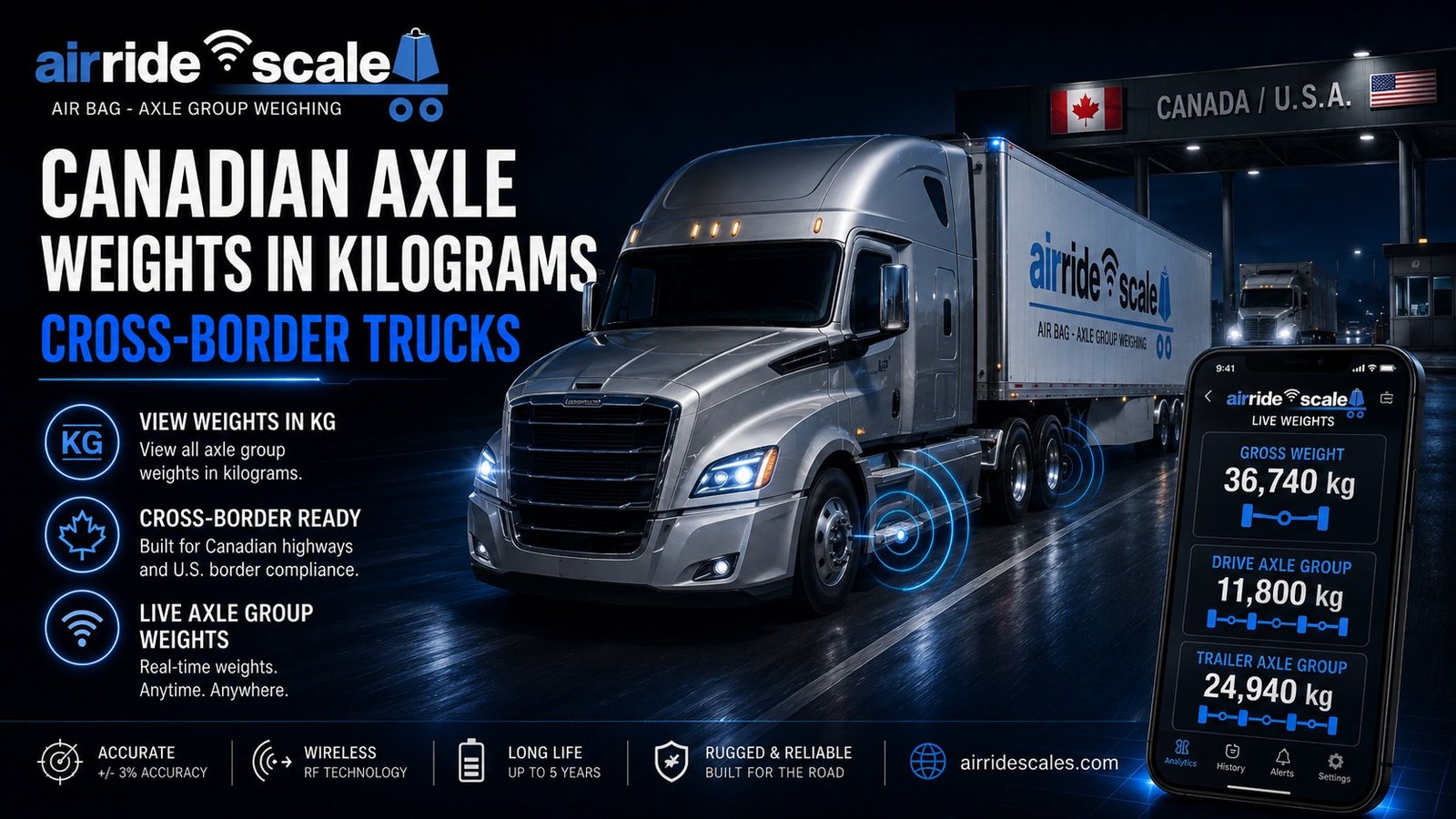
AirRide Scale reads each air ride suspension group through wireless RF sensors and displays live weights in the Loadsense app in kilograms or pounds, switched in a tap. The same screen serves both sides of the border:
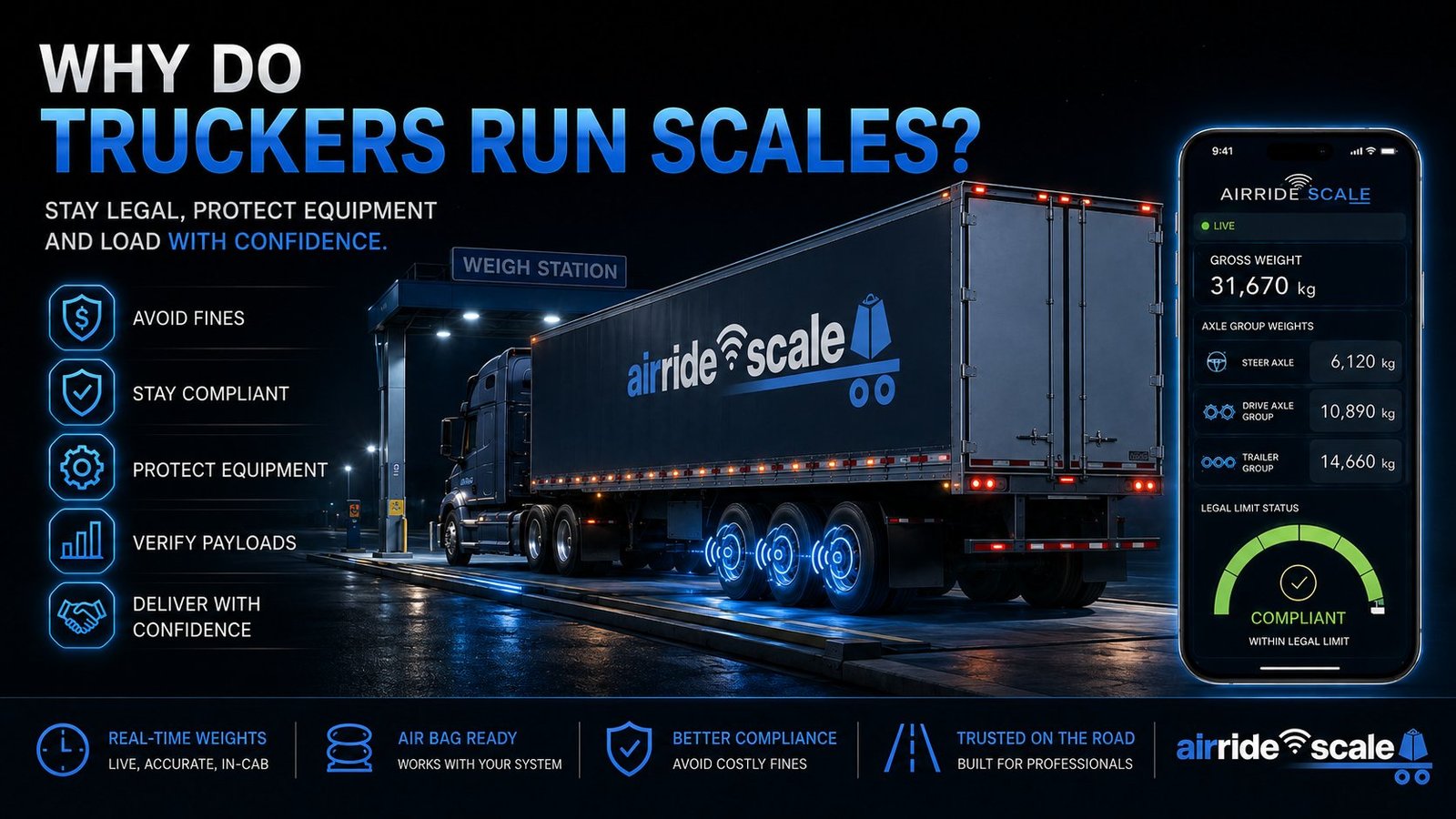
- Steer, drive and trailer groups shown separately, the way both US and Canadian enforcement weigh them.
- Gross combination weight against whichever limit applies to your route.
- Real time updates while loading, so the load is built legal rather than corrected later.
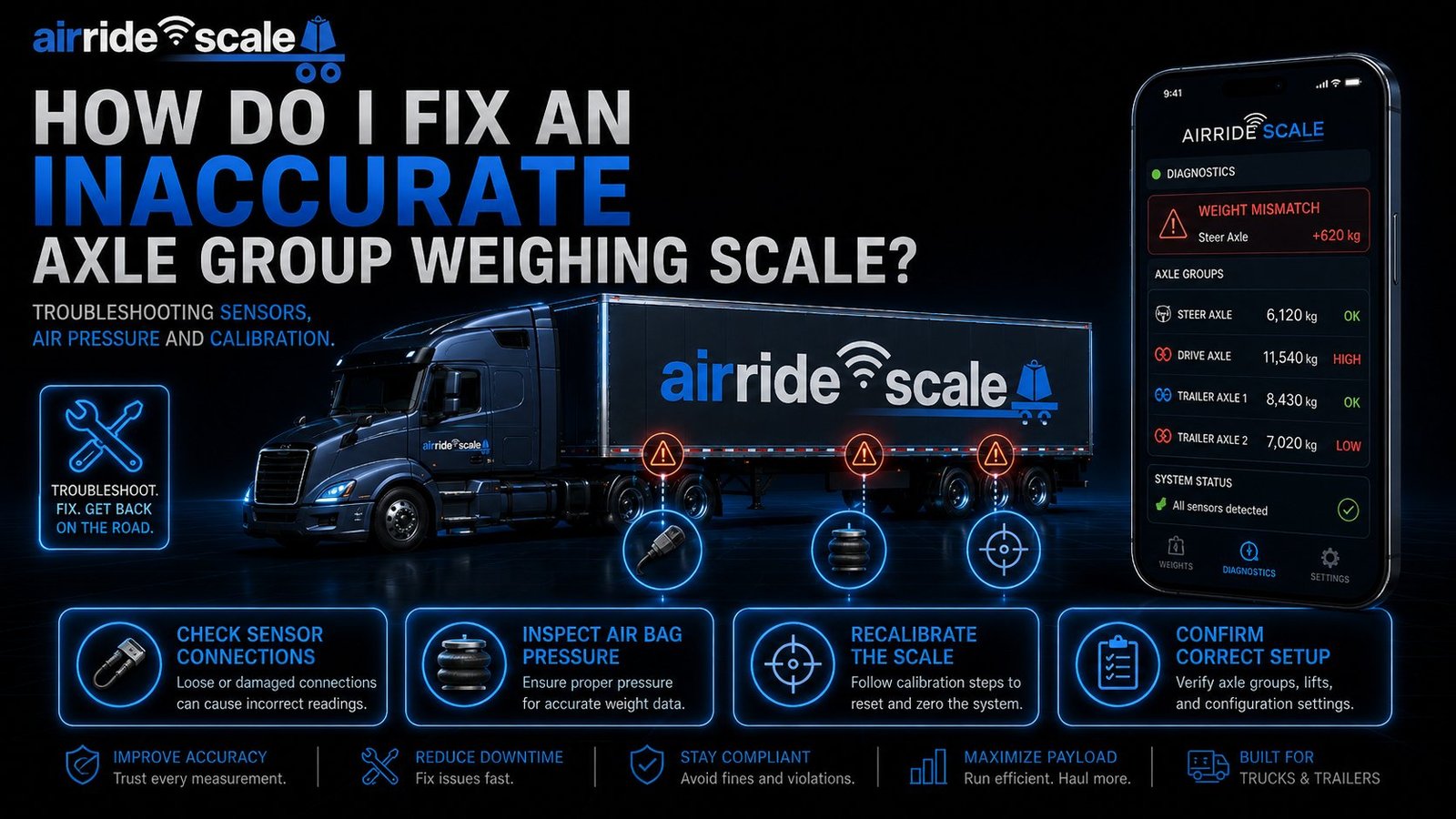
- Stored calibrations that stay accurate across trailer swaps and re hooks.
Winter matters: Canadian operators know the season changes the rules. When thaw restrictions lower limits on regional roads, the same live axle view that kept you legal in August is what keeps you legal in March, no new hardware, just a different number to stay under.
The scale house economics work the same
Truck stop scales in Canada charge in the same range as US CAT scales, and the pattern is identical: pay to learn the answer after loading, queue at peak times, pay again after any fix. Provincial inspection stations weigh by group, so the compliance question is always the per axle question. An onboard air ride scale answers it at the dock, on every load, in the unit the day requires. Our cost breakdown of public scales versus onboard weighing applies on both sides of the border.
Air ride suspension only. AirRide Scale weighs through the air springs, so it fits tractors and trailers with air bag (air ride) suspension on each axle group you want to weigh. The vast majority of highway equipment running the US Canada corridors qualifies.
Fitted for the corridor, not the country
Sensors mount to the air bags, the AirRide Air Link hub relays everything to the app, and calibration is done once per group against a known weight, a certified ticket from either country works. From there the truck carries its own scale through Michigan, Ontario, Quebec or British Columbia alike, and the optional Loadsense cloud portal gives dispatch the same live picture at head office. See the truck scales and trailer scales pages for the full system.
Loading in one country for limits in the other
The hardest cross border loads are the ones built in the country they will not be enforced in. A trailer loaded in Chicago for Toronto has to be stacked against Ontario’s group limits before it ever sees an Ontario scale, by a warehouse crew thinking entirely in pounds. The practical answer is to load against the tighter constraint from the start, and live axle weights make that workable: set the app to kilograms while the US shipper loads, watch the groups against the Canadian numbers your route requires, and the trailer crosses legal without a border-side correction. Southbound the trick reverses in one tap. Dispatchers planning backhauls get the same benefit from the cloud portal, seeing in real time whether a loaded unit can legally take the return freight being offered, in whichever unit the customer quoted it.
The bottom line: the border changes the units and the limits, but not the physics. An air ride scale reads the load the same way in both countries and keeps the compliance question answered before every departure. Ask us about cross border fleets.