Reefer freight is heavy freight. Meat, produce, dairy and frozen goods load dense, and the trailer itself starts heavier than a dry van: an insulated box, a diesel powered refrigeration unit on the nose, and a fuel tank underneath add well over a thousand pounds before the first pallet goes on. That is why reefer trailers live closer to the legal limit than almost anything else on the road, and why an air ride scale earns its keep fastest on refrigerated work.
Why reefers overload so easily
A refrigerated load is rarely uniform. Pallet weights vary, pick sequences change, and the reefer unit concentrates weight at the front of the trailer. Load 44,000 pounds of product and the questions begin: how much of it landed on the trailer tandems, how much transferred to the drives through the kingpin, and did the reefer fuel you topped up this morning push a group over? Without an onboard scale, the only way to know is a public scale after loading, when the shipper has closed the doors and moving product means broken cold chain, broken seals and lost time.
What AirRide Scale shows on a reefer
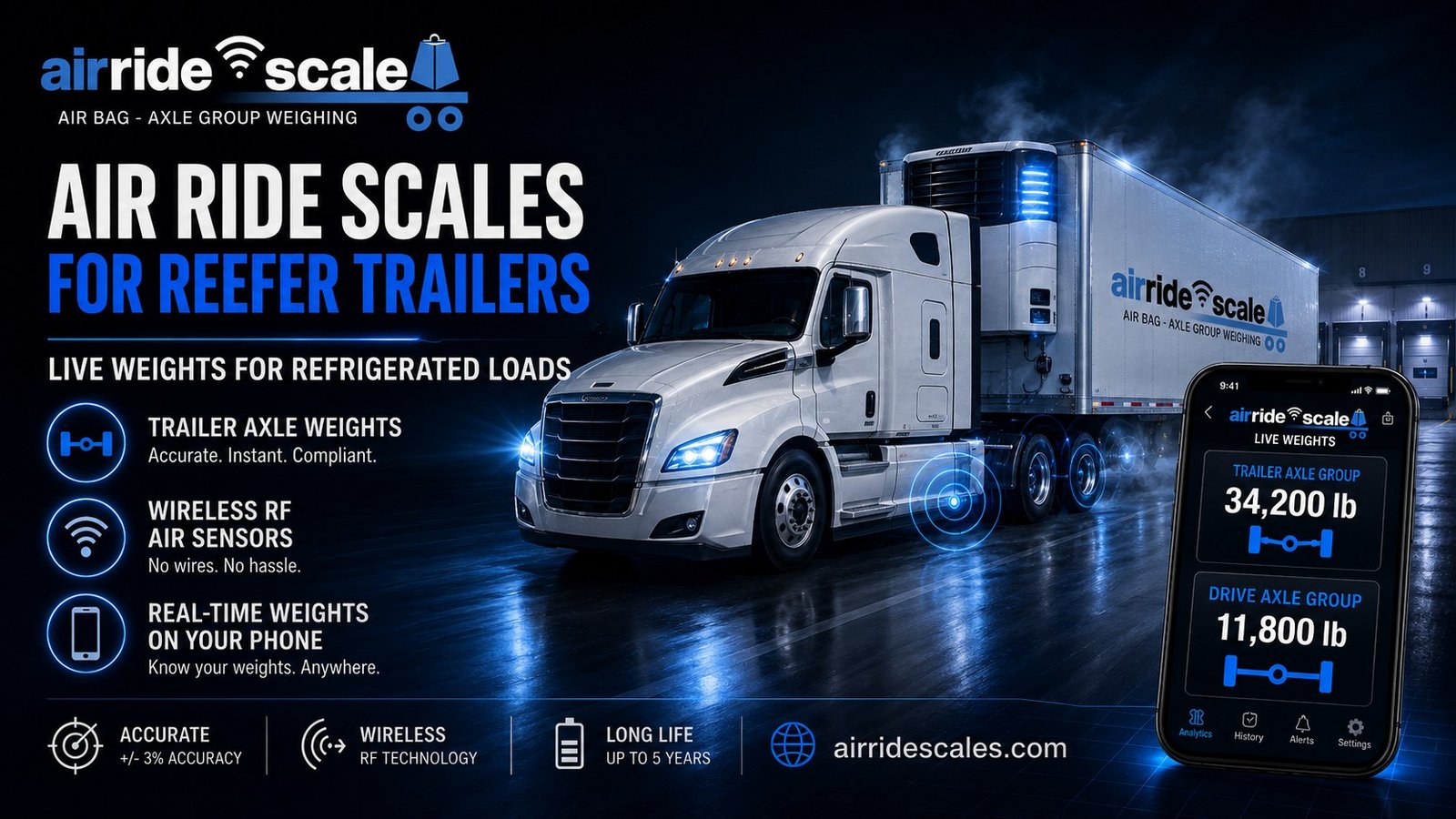
AirRide Scale fits wireless RF sensors to the air ride suspension on the trailer tandems, and on the tractor too if you want the whole picture. While the forklift is still working, your phone shows:
- Trailer axle group weight, live, as each pallet goes on.
- Drive axle group weight, so you catch forward loaded product before it buries the tandems on the tractor.
- Gross combination weight against the 80,000 pound US federal limit or your Canadian configuration limit.
- A clear legal status, compliant or over, before the doors close.
Cold chain advantage: catching an overload at the dock means pallets can be restacked or dropped in minutes, with the product still on refrigerated ground. Catching it at a scale house 30 miles later means opening a sealed, temperature controlled trailer on a parking lot.
The CAT scale habit, priced out
Refrigerated carriers weigh more often than anyone because the loads run so close to max. At roughly 13 to 15 dollars per weigh plus reweighs, a busy reefer weighing three or four times a week is spending 2,000 to 3,000 dollars a year on scale tickets, plus detour miles and dock to scale time. An air ride scale removes almost all of it: weigh at the dock, every load, at no marginal cost, and keep public scales for occasional calibration checks.
Air ride suspension only. AirRide Scale reads load through the air springs, so the reefer trailer needs air bag (air ride) suspension on each axle group you want to weigh. Most modern refrigerated trailers in the USA and Canada qualify.
Fitted to the trailer, not the tractor swap
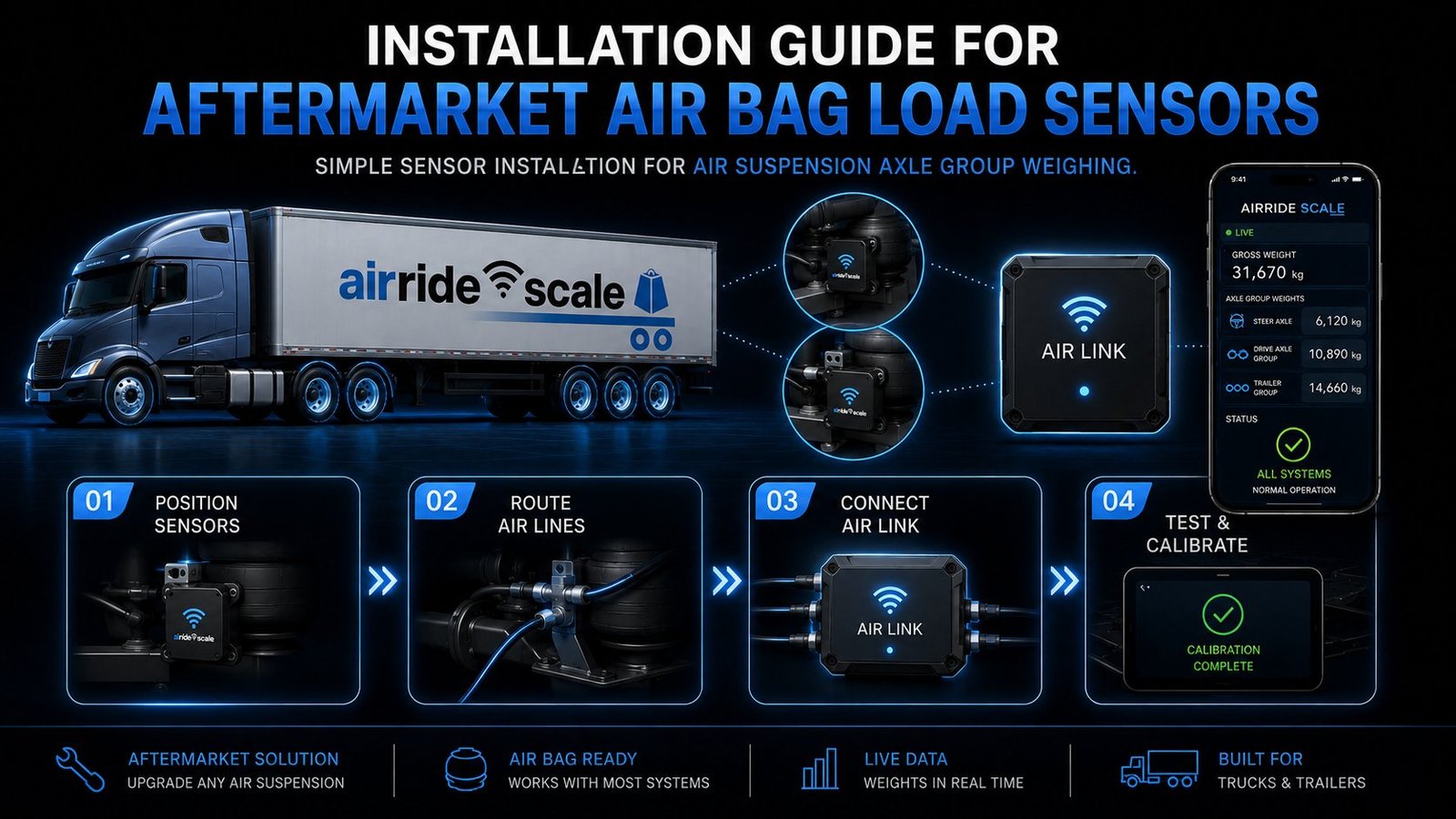
Sensors and calibration belong to the trailer, so drop and hook operations keep working. Whichever tractor picks up the reefer, the trailer group reads correctly, and one AirRide Air Link hub covers the full combination with up to 16 sensors. Installation is a same day retrofit: mount sensors at each air bag, connect the Air Link, pair the Loadsense app, calibrate against a known weight. Our trailer scales page covers the details, and the sensor installation guide walks through the fit.
Reefer fuel, ice and the weights that change overnight
A reefer’s weight is not fixed even when the freight is. Fifty gallons of reefer diesel burns down over a two day run and gets topped back up before the return load, moving hundreds of pounds on and off the nose of the trailer. Washouts leave water in the box, winter adds ice and snow pack on the roof, and none of it shows on the bill of lading. Crews that weigh once at the shipper and trust the ticket for the rest of the week are really trusting last Tuesday’s trailer. With sensors on the air ride suspension, the current weight is always the displayed weight: top up the reefer tank and watch the trailer group tick upward, scrape the load bars and dunnage out and watch it fall. That live picture also settles disputes at receiving: when a consignee claims short product, a time stamped weight from loading tells you what actually left the dock.
The bottom line: reefer margins are tight and reefer weights are tighter. An air ride scale on the trailer turns every dock into a scale, protects the cold chain, and keeps refrigerated freight legal from the first pallet to the last drop. Talk to us about your reefer fleet.