On a reefer, gross weight is only half the story. A refrigerated trailer can scale under 80,000 pounds gross and still be illegal because the load sits wrong: drives heavy from pallets stacked at the nose, or trailer tandems buried by product loaded to the rear. Weight distribution is where refrigerated loads pass or fail, and it is exactly what an air ride scale shows you live.
Why distribution goes wrong on refrigerated freight
Reefer loading fights physics from the start. The refrigeration unit and its fuel tank put a permanent bias at the front of the trailer. Mixed grocery loads combine heavy pallets of drinks or meat with light pallets of produce, and pick order at the warehouse decides sequence more often than axle math does. Airflow matters too: pallets must leave chutes and spacing for refrigerated air to circulate, which limits how freely you can rearrange them. The result is a trailer where two identical gross weights can produce completely different axle readings.
The kingpin seesaw
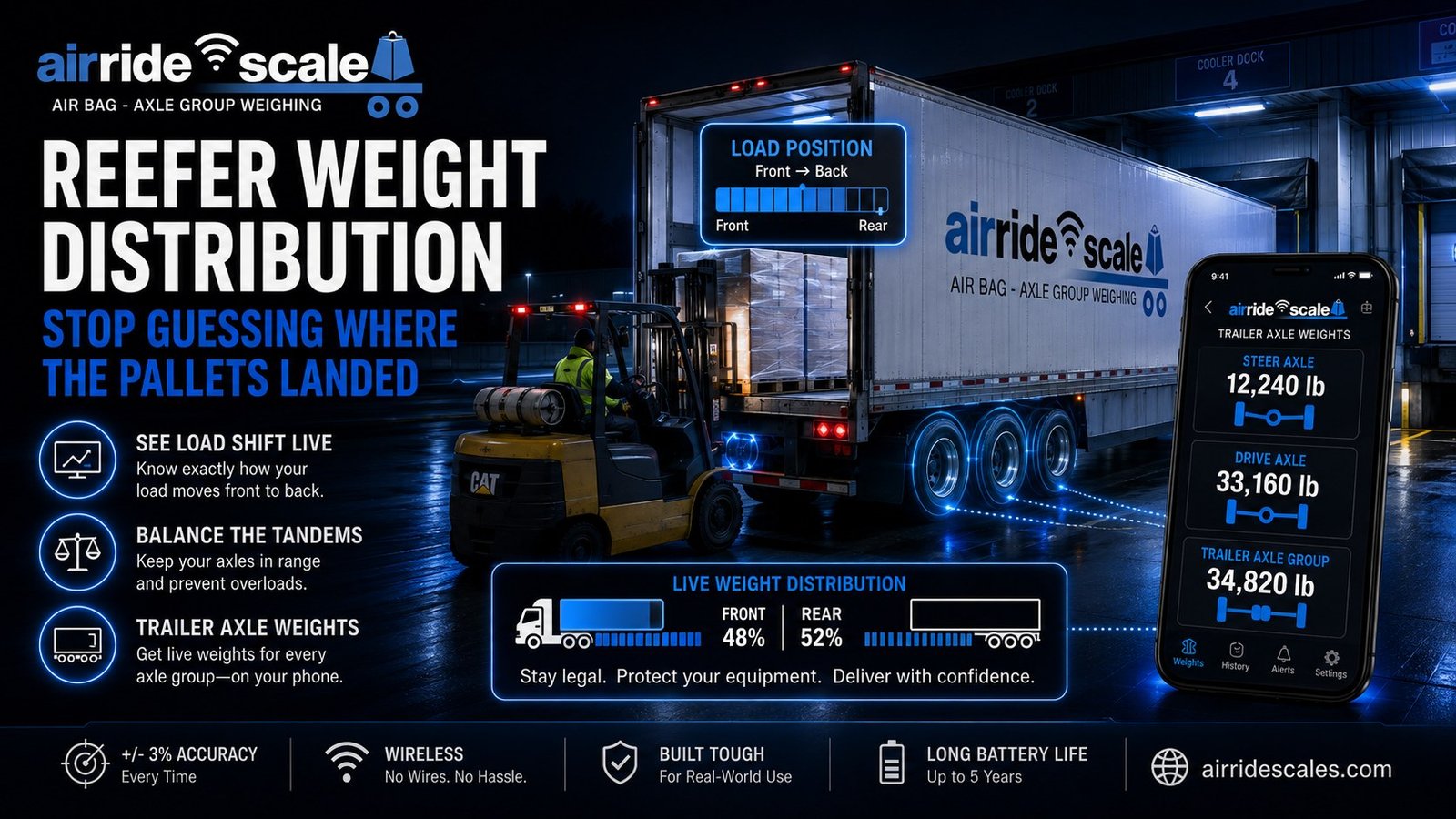
Weight placed ahead of the trailer tandems transfers through the kingpin onto the tractor drive axles. Weight behind the tandems loads the trailer group and can even lighten the drives. Slide the tandems and the split changes again. Without live numbers, drivers manage this with experience and hope, then buy a CAT scale ticket to find out if hope worked. With sensors on the air ride suspension, the seesaw becomes visible: load a heavy pallet forward and watch the drive group climb on your phone, in real time, while the forklift is still in the trailer.
- Drive tandem live weight, so front loaded product gets caught immediately.
- Trailer tandem live weight, so rear stacking never buries the group.
- Both at once, which is the only way to actually balance a load rather than chase it.
Dock beats scale house: at the dock, fixing distribution means the forklift moves two pallets and the app confirms the fix in seconds, cold chain intact. At the scale house, it means opening a sealed refrigerated trailer in a parking lot, restacking by hand, and paying for a reweigh.
Slide decisions with numbers, not guesswork
Tandem slides remain the everyday distribution tool, especially where bridge law ties allowable weight to axle spacing. An air ride scale turns each slide from a guess into a measurement: move the tandems one stop, watch the drive and trailer groups rebalance on screen, done. On multi stop grocery runs the same live view shows how the balance shifts after every delivery, so you stay legal for the whole route, not just the first leg. Our guide to axle group weighing on air suspension covers the fundamentals.
Air ride suspension only. AirRide Scale reads weight through the air springs, so the tractor and reefer need air bag (air ride) suspension on each axle group you want to weigh.
Set up for reefer work
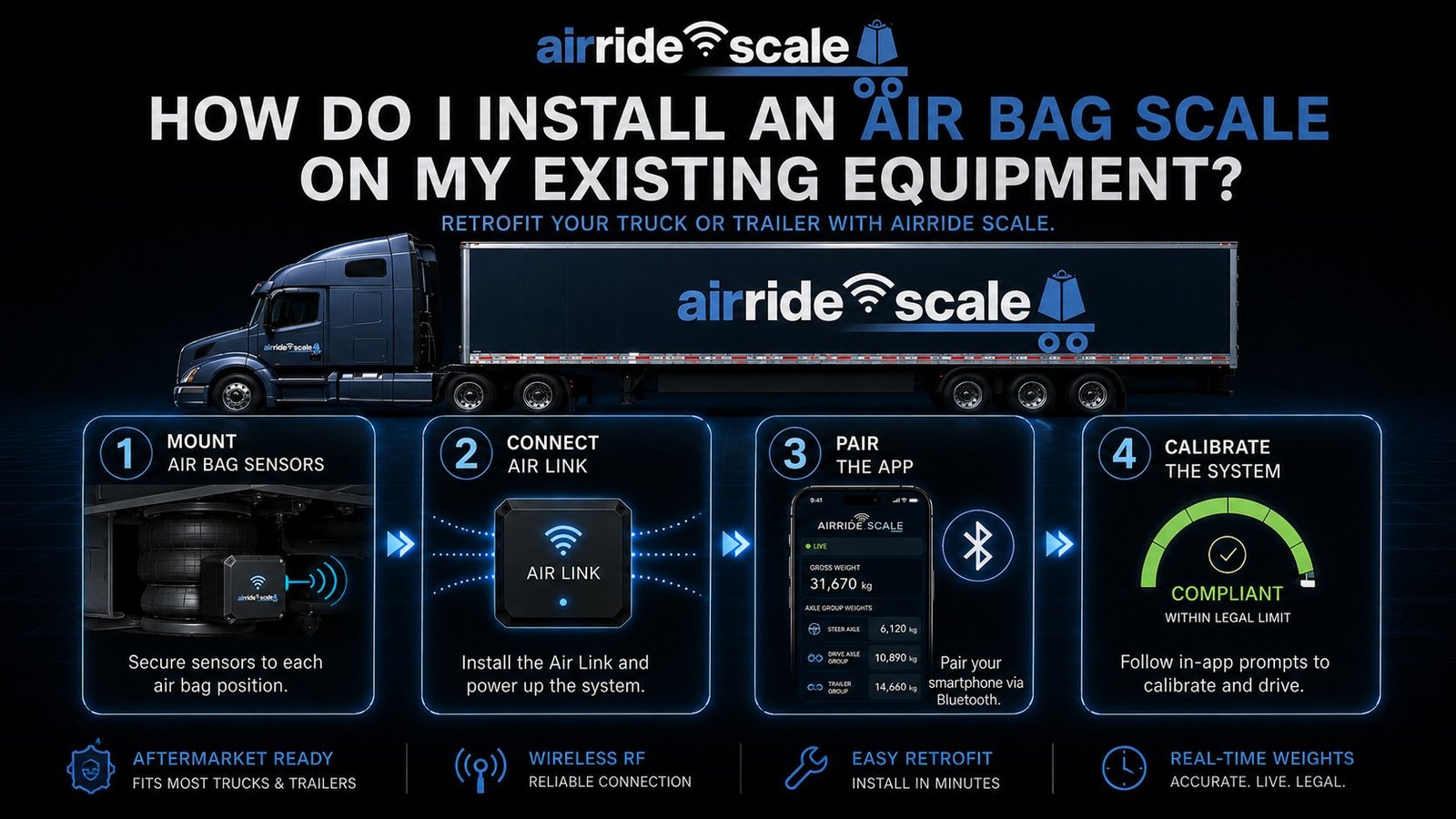
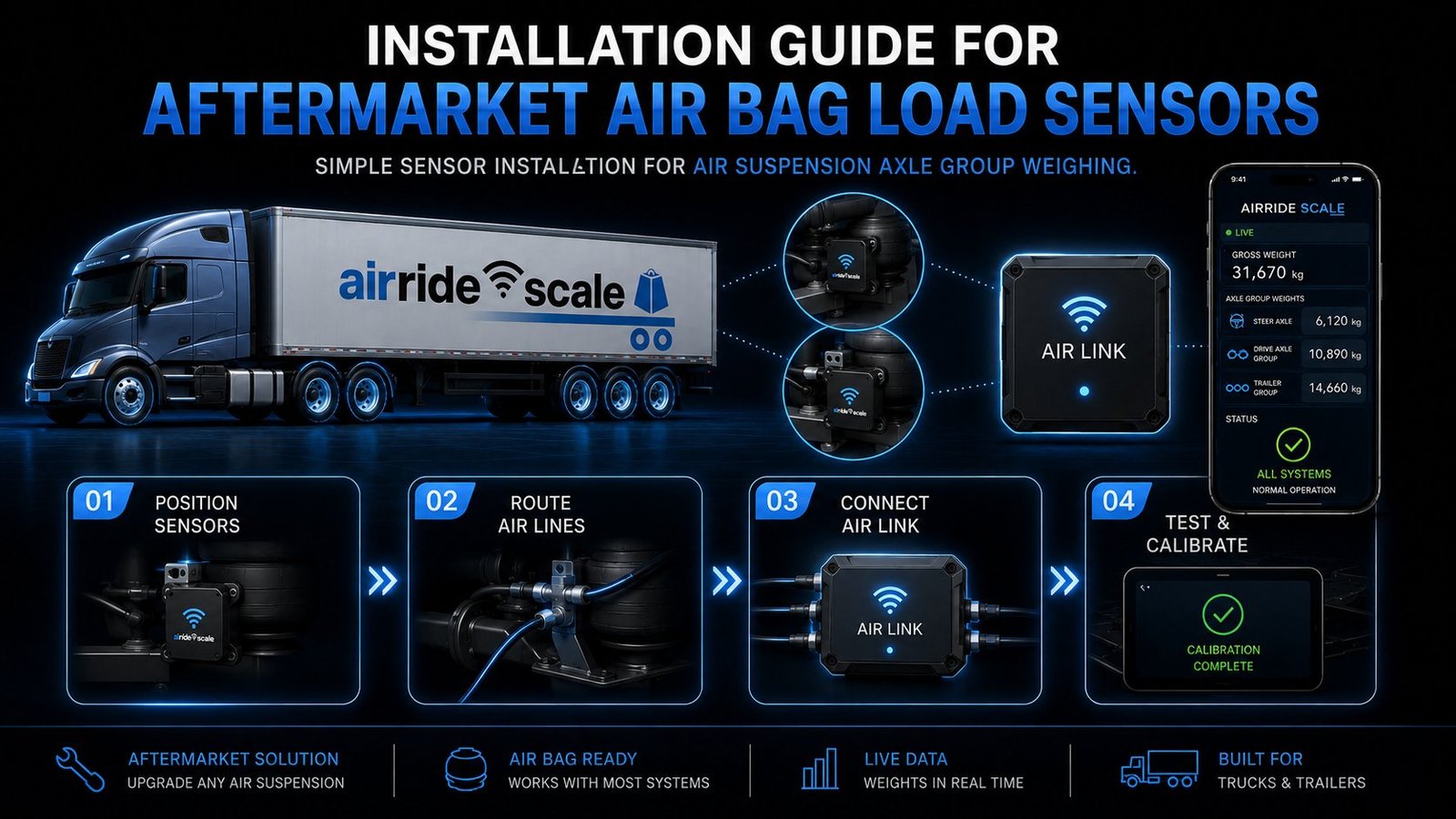
AirRide Scale fits the trailer tandems and the tractor drives with wireless RF sensors, feeding one AirRide Air Link hub and one app view. Calibrate each group against a known weight and the distribution picture stays accurate load after load, trailer swap after trailer swap. See the trailer scale setup, or ask us about your reefer operation.
A loading routine that actually works
Distribution control becomes simple once the numbers are live. Start with the known bias: on most reefers the unit and full fuel tank pre load the nose, so plan heavy pallets slightly rear of centre rather than evenly spaced. Watch the drive group as the first third of the load goes on, that is where forward stacking shows up first. At the halfway point compare drives and trailer tandems: if they are diverging, swap the next heavy pallets to the light end and watch the split close. Finish the load with both groups inside their limits and daylight to spare, because reefer fuel burn and multi stop deliveries will shift the balance en route. Drivers describe the change the same way: loading stops being a memory game about which warehouse stacks heavy, and becomes a screen you glance at between pallets. New hires get it right on day one, because the trailer itself is teaching them.
The bottom line: refrigerated freight rarely fails on gross, it fails on placement. An air ride scale makes placement visible while you can still fix it for free.