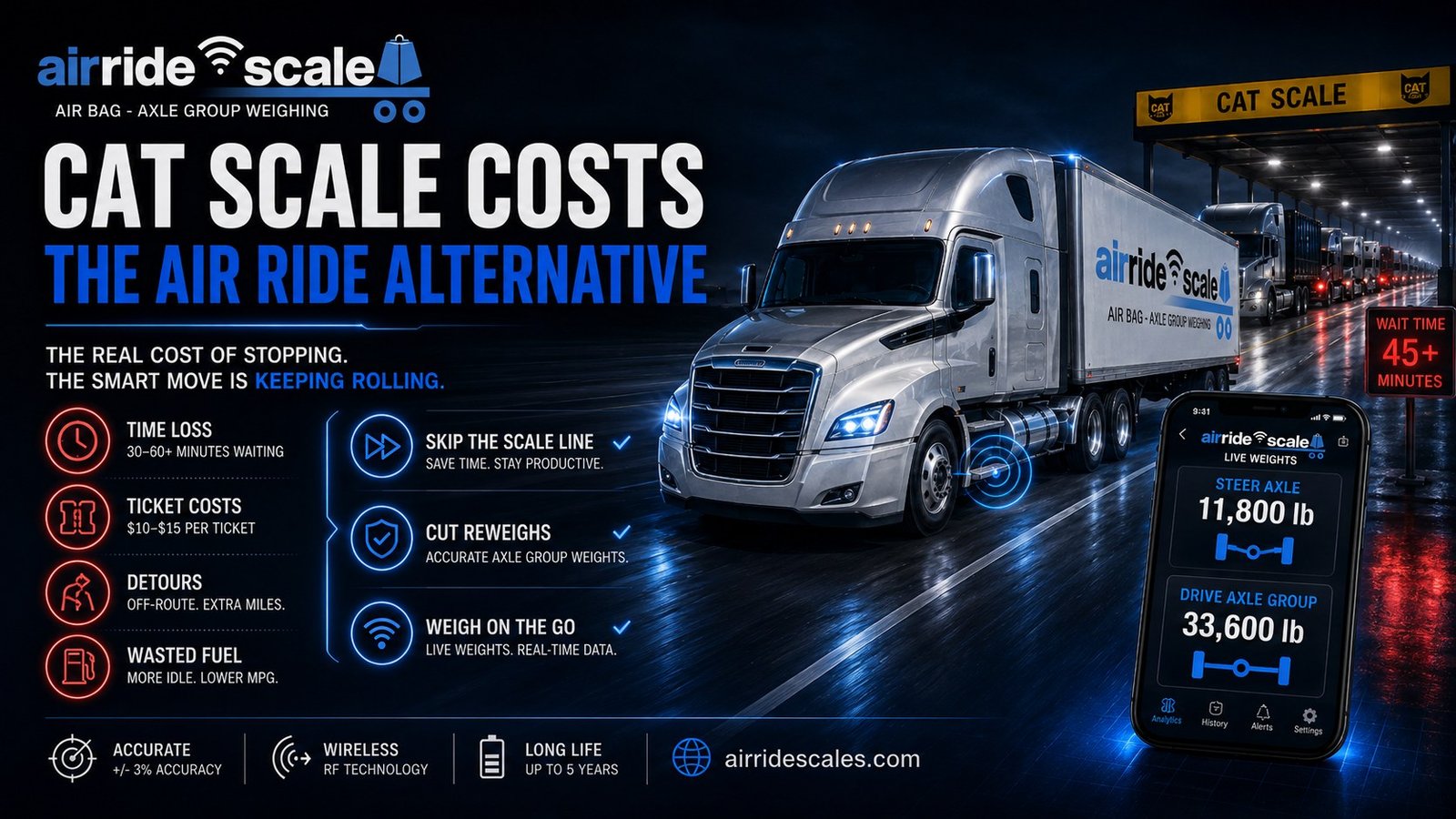
Nobody budgets for the scale house, but everybody pays it. A first weigh at a CAT scale in the USA runs around 13 to 15 dollars, a reweigh a few dollars more, and Canadian truck stop scales charge similar money. One ticket feels trivial. A year of tickets is anything but, and the ticket is only the visible cost. Let us do the honest math, then look at what an air ride scale changes.
The visible cost: tickets
A tractor trailer that weighs twice a week buys roughly 100 weighs a year. At 14 dollars average that is about 1,400 dollars, before a single reweigh. Slide the tandems and confirm the fix and the total climbs. A reefer or bulk operation weighing four times a week can clear 3,000 dollars a year, per truck. Multiply across a ten truck fleet and public scales quietly cost more than most software subscriptions the office argues about.
The hidden costs: miles, minutes and risk
- Detour miles. The scale is rarely on your route. Ten extra miles per weigh, twice a week, is over a thousand unpaid miles a year, in fuel you bought.
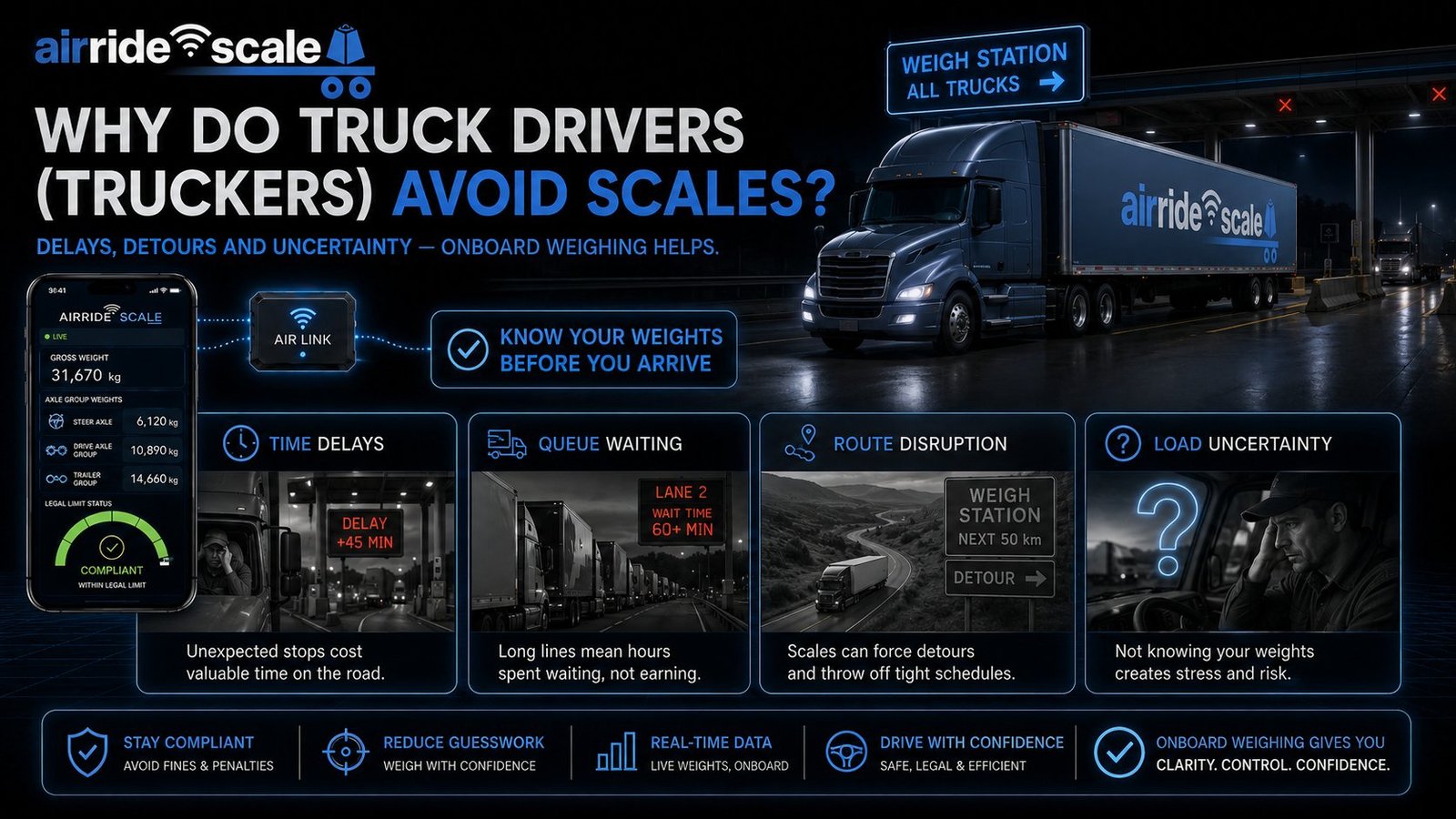
- Queue time. Busy truck stop scales stack up at exactly the hours you are trying to leave. Twenty to forty minutes per visit is normal, and hours of service do not pause while you wait.
- The after the fact problem. A public scale tells you the answer only after loading. A bad ticket means going back, reworking the load, and paying to weigh again.
- The risk you did not catch. Skip the weigh to save time and an overweight citation at a DOT scale can run from a few hundred dollars into the thousands in some states and provinces, plus the out of service delay while you fix the load.
Rule of thumb: if a truck weighs at public scales more than once a week, an onboard air ride scale typically pays for itself in the first year on tickets alone. Everything after that, the miles, the minutes, the avoided fines, is profit.
What the air ride alternative looks like
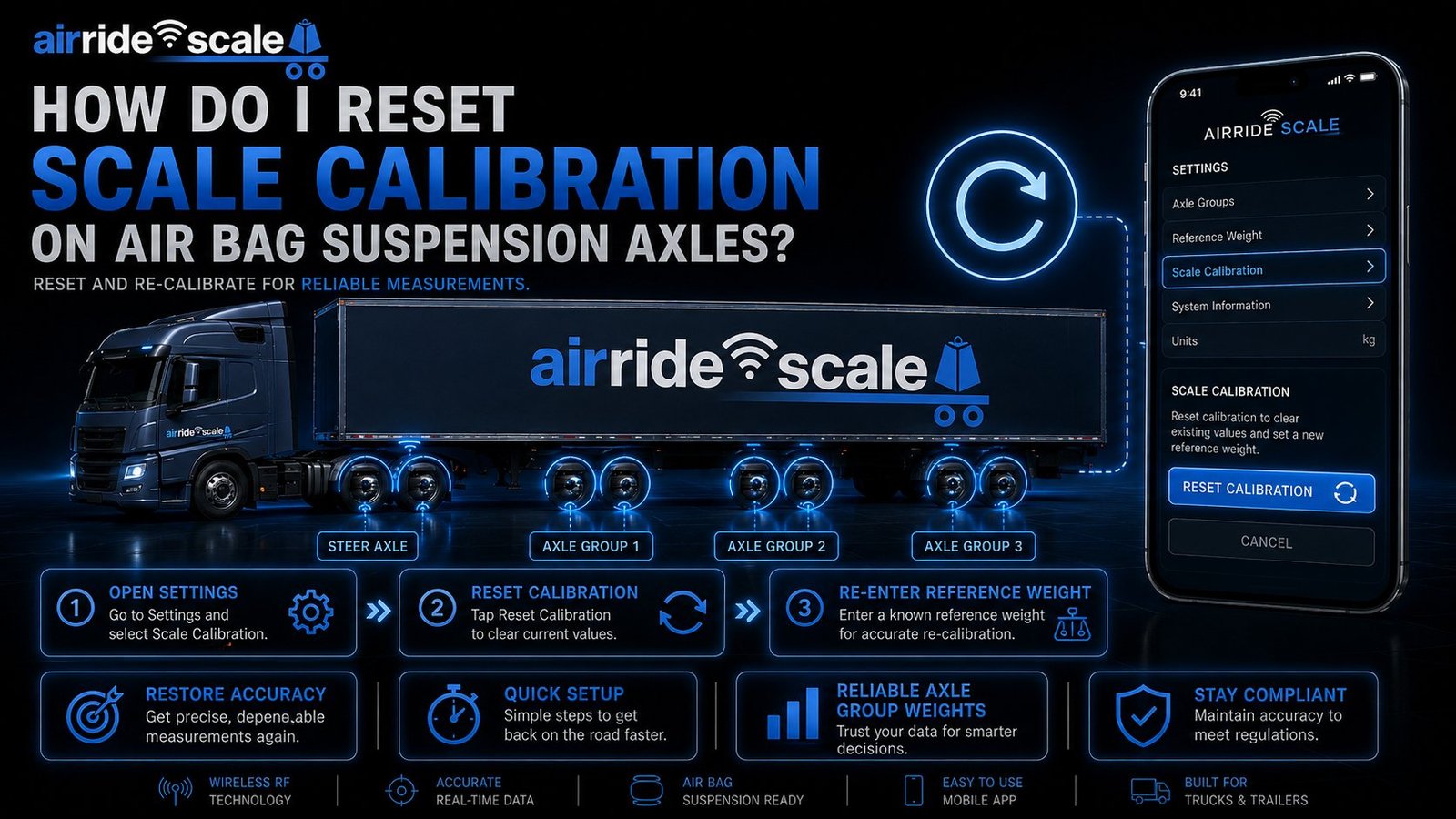
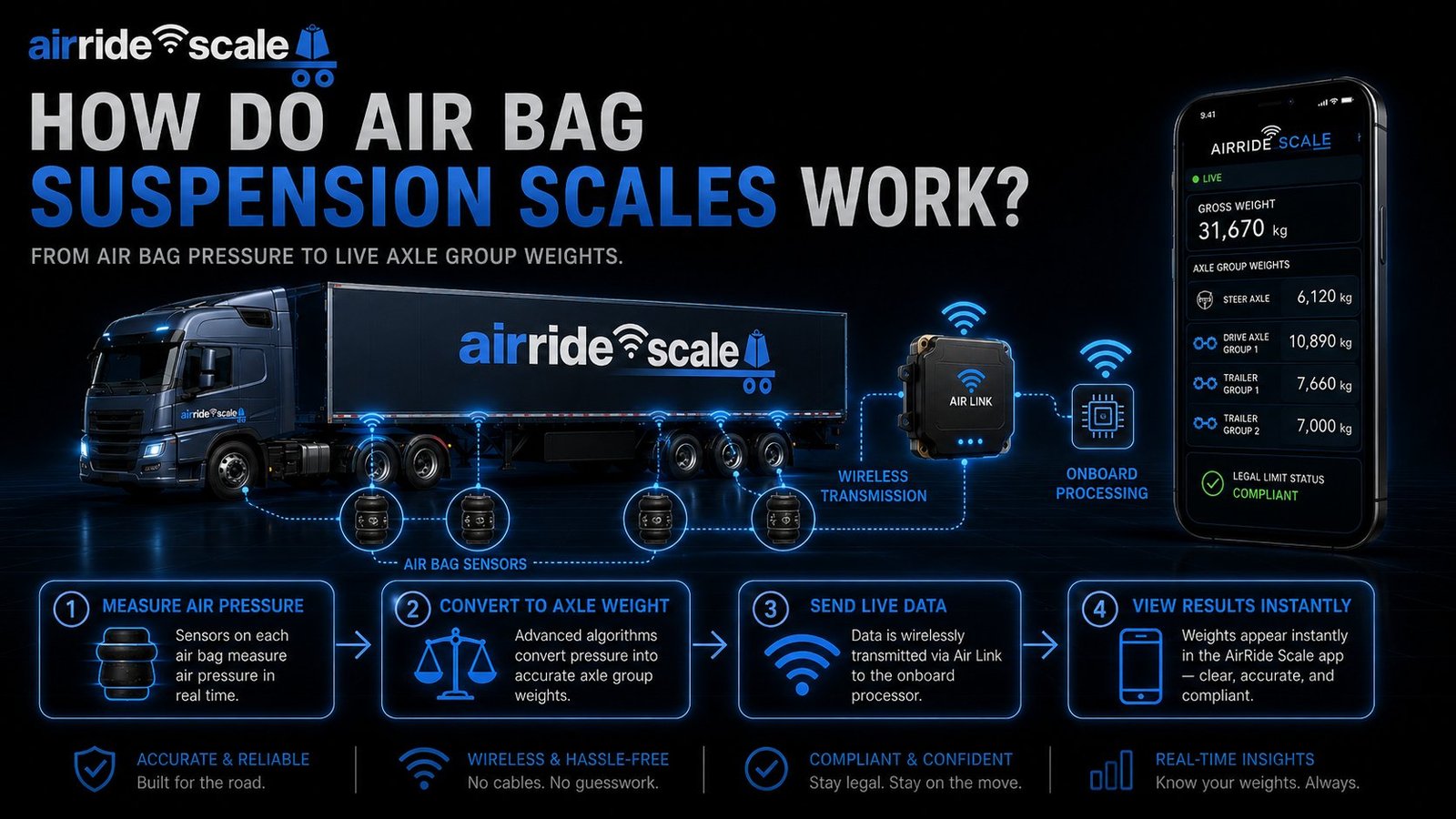
AirRide Scale uses the air ride suspension your tractor and trailer already have. Wireless RF sensors read each air bag group, the AirRide Air Link hub relays the data, and the Loadsense app on your phone shows steer, drive and trailer weights live, with a clear legal limit status. You weigh while loading, at the dock, for nothing. The system covers a full combination with up to 16 sensors, fits as a same day retrofit, and calibrates against your last clean scale ticket. Read how it works as a truck scale and a trailer scale.
Air ride suspension only. AirRide Scale weighs through the air springs, so each axle group you want to weigh must ride on air bag (air ride) suspension. Spring suspensions are not supported.
Where public scales still fit
Certified scales keep a role: they are the best source for your calibration reference, and some shippers require a certified ticket for billing. The difference is frequency. Instead of paying to answer the same question a hundred times a year, you visit occasionally to verify calibration, and your air ride scale answers the question every day in between.
Run the numbers for your own operation
The math is worth doing per truck, because the answer depends on how often you weigh. Count last quarter’s scale tickets from your fuel card statements, most drivers are surprised, then add a conservative 30 minutes and ten miles per visit at your operating cost per hour and per mile. A truck weighing twice a week at 14 dollars, ten detour miles at 2 dollars per mile equivalent, and half an hour at 60 dollars per hour of truck time is really spending about 64 dollars per weigh, over 6,000 dollars a year. Even cutting those figures in half leaves a number that dwarfs the one time cost of an onboard system. Then add the tail risk: a single overweight citation with an out of service order can erase a week’s margin. Fleets that fit air ride scales usually report the same pattern, the tickets stop immediately, and the fines simply never come.
The bottom line: the scale house was never free, it was just familiar. Price the tickets, the miles and the minutes honestly, and an onboard air ride scale is one of the fastest paybacks in the truck. Get a quote for your fleet.